
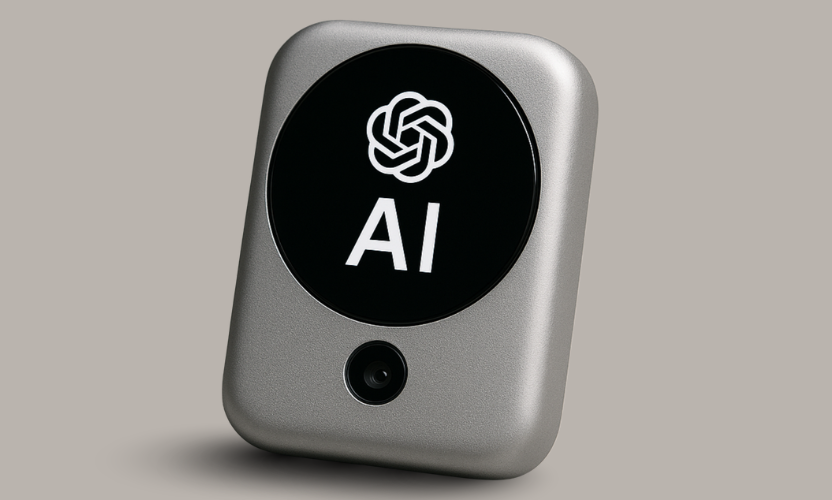

The ideal AI device in 2026 is no longer a passive tool but a proactive, agentic collaborator that balances local high-performance processing with deep human-centric design.
Core Characteristics of the Ideal AI Device
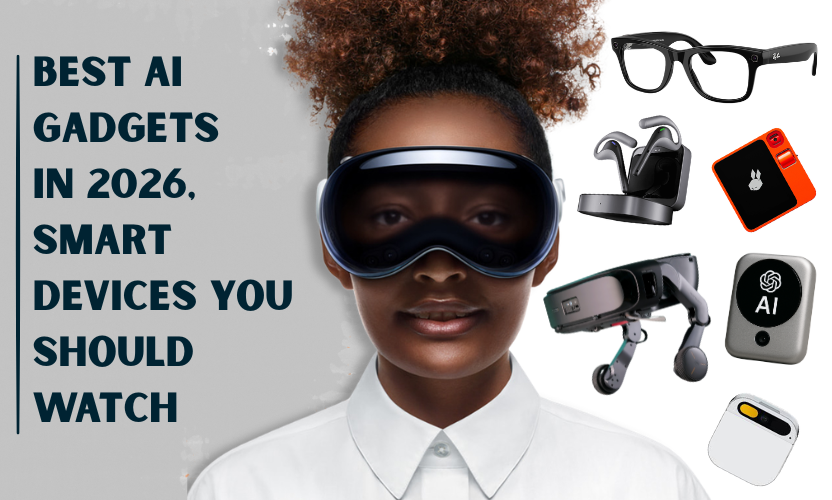
- Agentic Autonomy: Moves beyond “copilots” to autonomous systems capable of executing multi-step tasks independently, such as “summarize, send, and tag” workflows.
- On-Device Intelligence: Prioritizes local processing to ensure data privacy and real-time responsiveness without constant cloud connectivity.
- Multimodal Interaction: Supports seamless switching between voice, touch, and spatial gestures, adapting to the user’s environment (e.g., voice for hands-free, haptics for noisy settings).
- Privacy by Design: Features local AI processing, zero server storage, and advanced encryption (like homomorphic encryption) to keep sensitive data internal.
Technical Specifications (2026 Standards)
| Component | Ideal Specification | Impact |
|---|---|---|
| Processor | 45–50+ TOPS (Tera Operations Per Second) | Handles complex concurrent tasks like real-time video and audio AI. |
| Hardware | Dedicated NPUs (Neural Processing Units) | Extends battery life by 30–40% compared to traditional CPU/GPU processing. |
| Battery | 5,000+ mAh with AI adaptive software | Prioritizes foreground tasks and limits background drain for 8–10 hours of heavy use. |
| Charging | AI-managed fast charging (15–30 min top-ups) | Learns daily routines to preserve long-term battery health. |
Design and UX Trends
The ideal device utilizes “Invisible AI,” where intelligence is woven into the interface to make it more human and less clinical.
- Anticipatory UI: Predictive UX that anticipates the next best action, reducing cognitive fatigue and friction.
- Tactile & Emotional Design: A return to “Liquid Glass” and light skeuomorphism to make digital elements feel more physical and Reassuring.
- Bento Box Layouts: Modular, compartmentalized grids that make complex information readable at a glance.
Emerging Form Factors
While smartphones remain central, the ideal AI ecosystem involves specialized wearables:
- Smart Rings: High-performance tracking for health metrics like continuous blood pressure and metabolic trends.
- Spatial Computing: Devices like AR/VR headsets that provide immersive collaborative workspaces and 3D data visualization.
Copyright@hcispace.com
Author: Rama Bastola